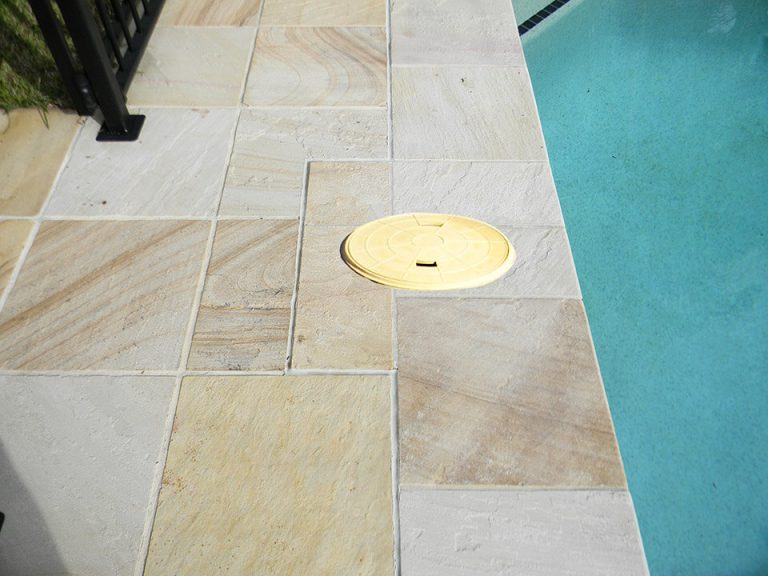
Occasionally, you’ll find leaks on the skimmer throat of a vinyl or fiberglass pool. When this happens, it’s a big problem and can cause the surrounding soil to become eroded.
It’s very important to repair this kind of skimmer throat leak properly. If you’re able to repair the problem correctly, it will save your customers a lot of money over time!
Throat Length
Depending on your skimmer model and pool design, you may need a longer throat than a standard installation HIDE Pool Skimmer Lids. This is particularly true for those with brick blocks or other non-standard materials requiring the skimmer to be positioned further back from the pool’s edge.
Fortunately, skimmer manufacturers have made the task of sealing the skimmer a relatively easy one by incorporating the aforementioned features into their standard offerings.
The best way to do this is to first consult your local skimmer manufacturer for specific recommendations and a suggested product list. Then, use this as a guide to determine which skimmer model will best suit your needs. This can help you avoid costly downtime and unnecessary stress. Lastly, make sure you include the following in your list of must haves: a good quality faceplate, a gasket, and the proper type of screws. The above tips should ensure you have a water-tight skimmer that performs as well as it looks.
Faceplate
The faceplate is a simple but versatile accessory for your lathe that can be used to hold regular and irregularly shaped work. It is a circular plate that fixes to the end of the lathe spindle and has either slots or holes machined on its surface to accept various fastening devices such as clamps and t-slot nuts.
It is typically screwed into place by threaded studs in the slots, but increasingly, camlock arrangements are common. These are a less conventional way to use the faceplate, but offer quicker and easier access than threaded studs.
The form includes a plug section 36 along one surface thereof which, upon inserting thereinto and removal thereof from the throat 27 of the skimmer 21, substantially closes the inlet opening to prevent admission of concrete thereinto. Moreover, a stop structure 46 is cooperatively engaged with the skimmer 21 to positionally relate the skimmer 21 and the plug section 36 in transverse and vertical directions (i.e., from top to bottom with respect to the pool and bowl of the skimmer).
Gaskets
A good skimmer throat seal will keep water from entering the pool through the mouth of the skimmer. This ensures that a skimmer will not leak and can save your pool from expensive damage.
A gasket that is designed to work with your skimmer is one of the best ways to make sure it will seal. Many of these come in a one piece, u-shaped form that covers the inside and outside of your pool’s wall opening.
Some of these also have a clever design with pre-made holes in the gasket that line up with the screws on your skimmer’s faceplate and your pool wall. But, some of these do not sit well against the wall and don’t do a good job of sealing.
I’ve had skimmers that were made of a cheap material or a poor quality gasket and they just did not lay well against the wall and leaking was the result. This isn’t a bad idea to replace these with paper type gaskets that are more rigid and will expand when it gets wet and hold their shape better.
Screws
A screw is a tapered fastener that uses threads to hold two pieces of material together. It can either mate with an existing thread or create its own thread in a material as it turns.
There are several types of screws, each optimized for different materials. You should select screws that are the right size and diameter to ensure their strength.
They also should be made from a metal that has the proper characteristics for your application. Steel, aluminum and nickel-based alloys are all good options for screws.
The next thing to consider is the shank diameter. The larger the shank diameter, the stronger the screw.
Finally, you should consider the threads per inch (TPI). Low TPI numbers like 7 or 8 are coarse screws for wood while high TPI numbers like 18 or 22 represent fine thread screws for metal fastening.
When you are installing your skimmer faceplate, make sure that all of the screws are compression tight. If any of them are not then water can leak through and you will have a big problem.